


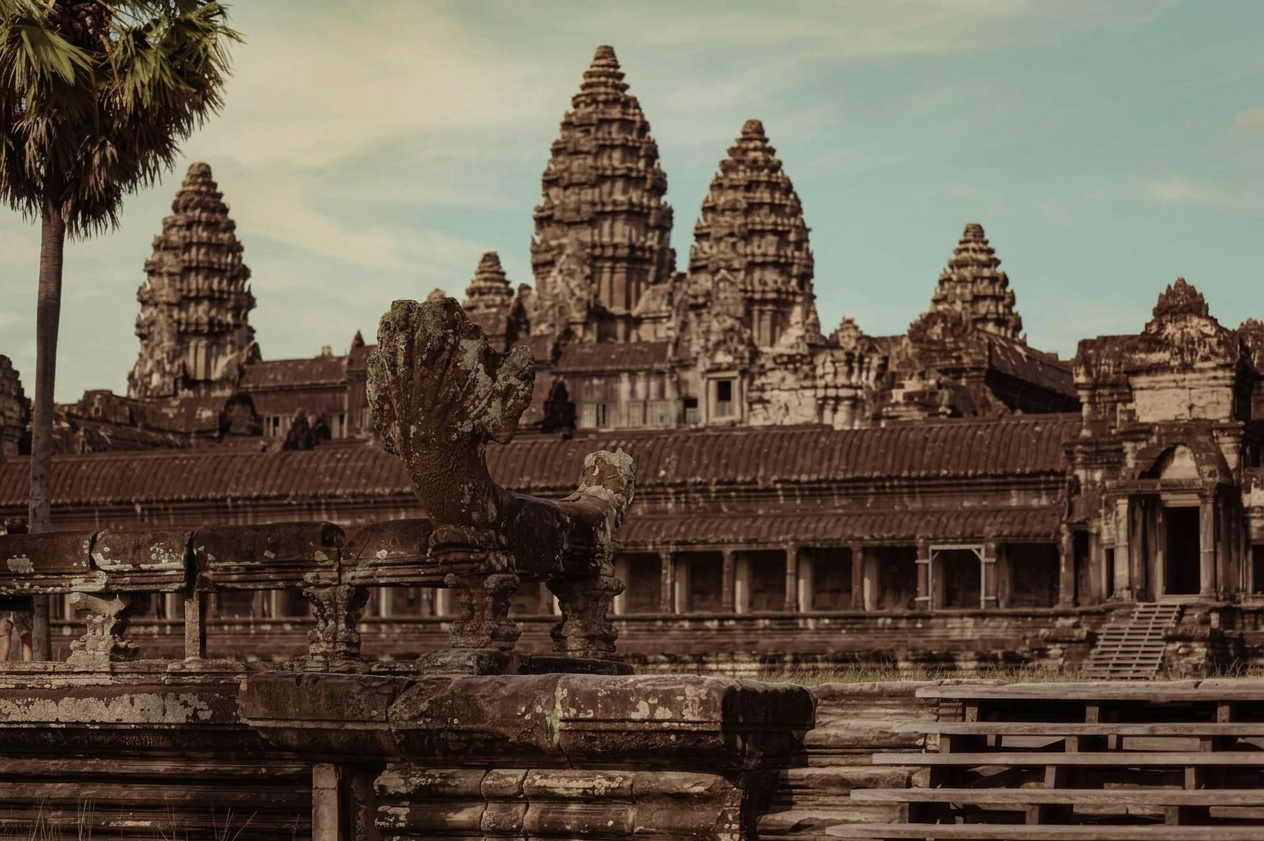
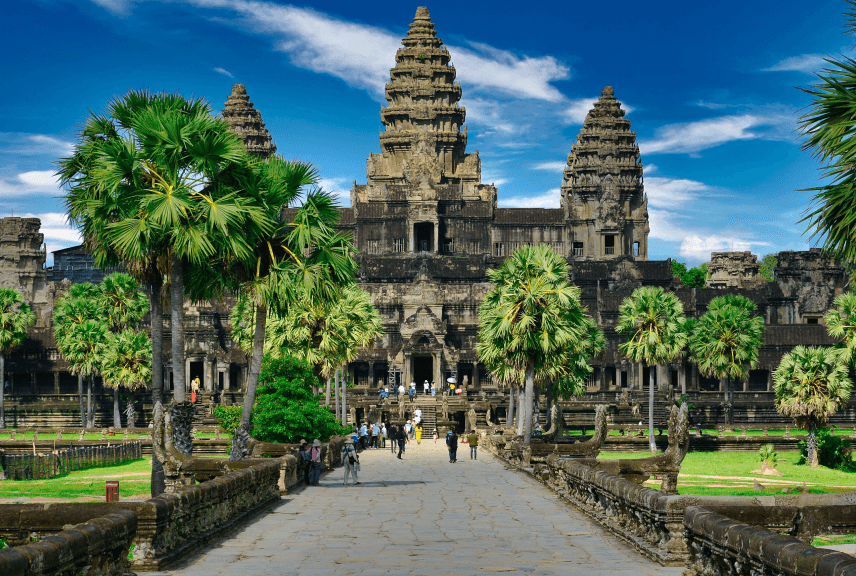
 Rising majestically above the Cambodian jungle, Angkor Wat is the world’s largest religious monument—a sprawling 400-acre masterpiece built in the 12th century by King Suryavarman II. Designed as an earthly representation of Hindu cosmology, its five iconic lotus towers mimic Mount Meru, the mythic home of the gods, encircled by a massive 190-meter-wide moat.
Unlike most ancient Khmer temples, Angkor Wat uniquely faces west toward the setting sun, aligning with its dual purpose as a sacred shrine for the god Vishnu and a royal mausoleum. Step inside to discover over 1,200 square meters of breathtaking wall carvings, including the famous Churning of the Ocean of Milk and nearly 2,000 delicate celestial dancers (apsaras). At dawn, as golden sunlight paints its iconic silhouette across the lily-dotted reflection ponds, Angkor Wat stands as an unforgettable testament to human artistic achievement.

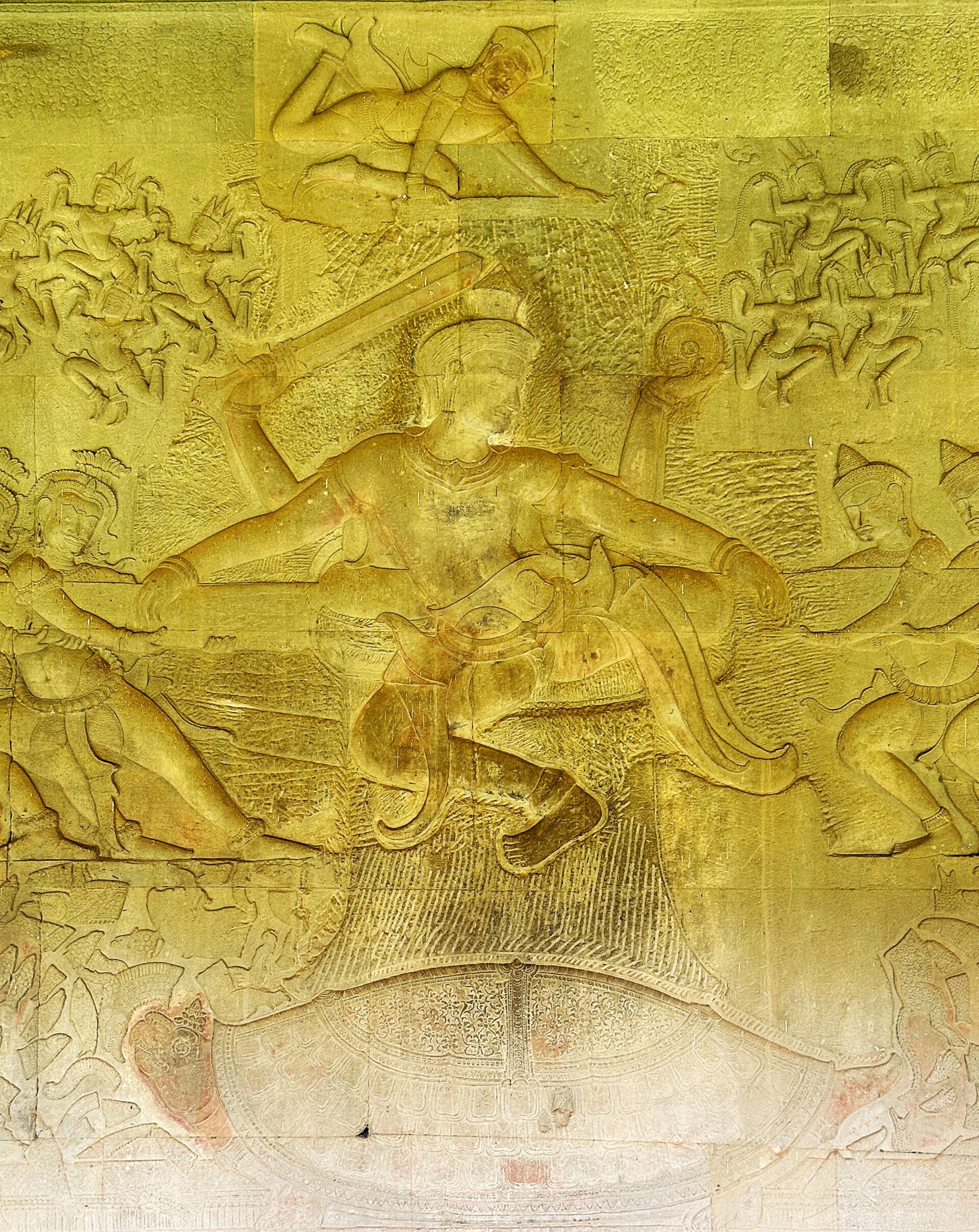
🐍 Churning of the Sea of Milk at Angkor Wat
The Churning of the Sea of Milk is one of the most famous and impressive bas-reliefs at Angkor Wat, illustrating a powerful story from Hindu mythology. The scene represents a cosmic struggle between devas (gods) and asuras (demons), who work together to churn the cosmic ocean in search of Amrita, the nectar of immortality.
At the center of the story, the serpent Vasuki is used as a giant rope, wrapped around Mount Mandara, which serves as the churning rod. The gods pull one side of the serpent while the demons pull the other, creating the cosmic churning motion.
This magnificent bas-relief stretches along the eastern gallery of Angkor Wat and contains hundreds of carefully carved figures. Beyond its artistic beauty, the scene represents themes of cosmic order, struggle, cooperation, and the triumph of divine forces, making it one of the temple’s most fascinating attractions.


2. Floating Village
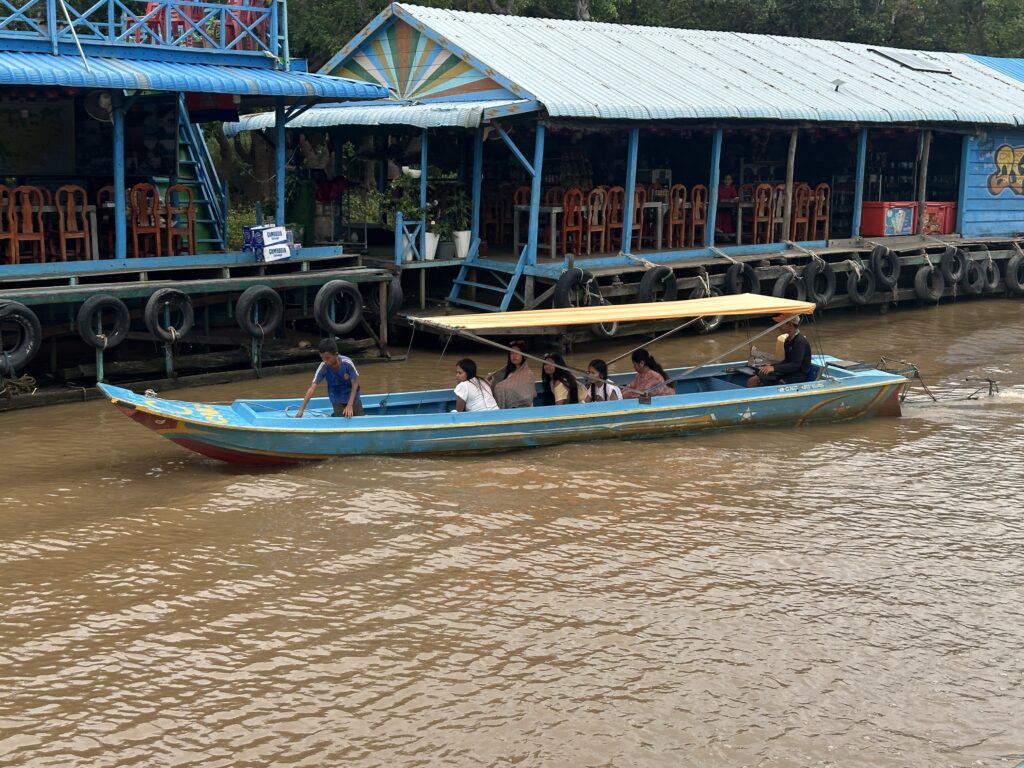
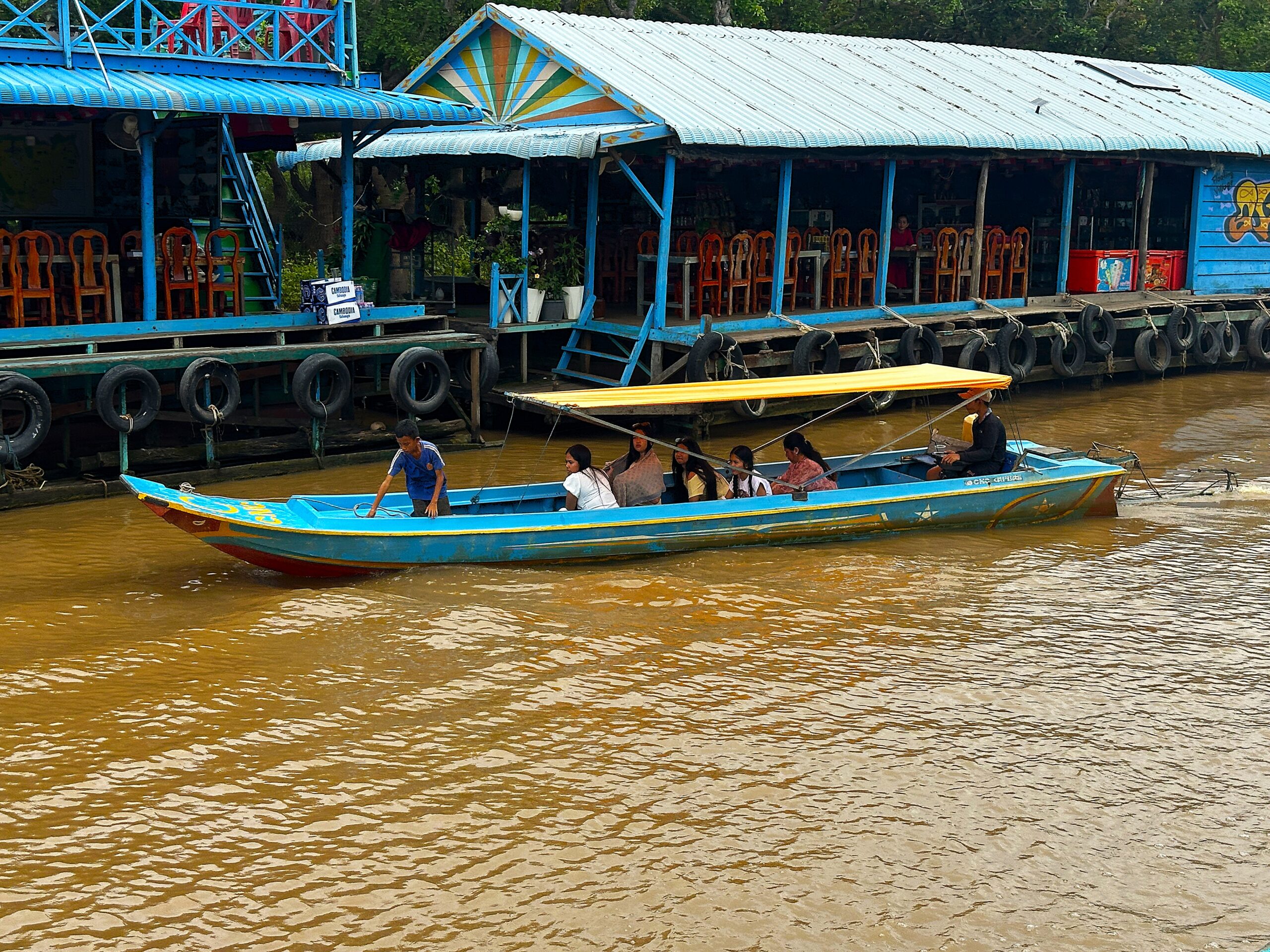
 Floating Village Tours offer a unique glimpse into life along Tonlé Sap, Southeast Asia’s largest freshwater lake. Entire communities adapt to seasonal water changes by living on floating structures or towering bamboo stilts.
Floating Village is an eco-tourism destination known for its authentic, less crowded experience compared to the places on land livings.
The fishermen of the Tonlé Sap floating villages live in total rhythm with Southeast Asia’s largest freshwater lake. Their entire livelihood relies on the unique hydrological miracle of the lake, which expands up to five times its size during the rainy season.
Make your visit to Siem Reap truly unforgettable with Angkor Birding Tours. Our experienced local team is ready to help you discover the temples, countryside, and floating villages at a comfortable pace with professional guiding and private transportation.
🌐 Website: angkorbirdingtours.com
📞 Tel / WhatsApp: +855 92304841
Book now and let us create an unforgettable Cambodian adventure for you!
| Destination | Angkor National Park and Tonel Shap Lake |
|---|---|
| Depature | Yes Required |
| Departure Time | 01 April, 2026 8.00AM |
| Return Time | 08 April, 2026 4.00AM |
| Included |
|
| Excluded |
|
 Travel With Bus/SUV Car or Tuk Tuk Travel With Bus/SUV Car or Tuk Tuk |
|
Angkor Wat Temple Masterpiece: Explore the world’s largest religious monument (400 acres), built in the 12th century by King Suryavarman II. Key sights include the 5 iconic Mount Meru lotus towers, over 1,800 celestial Apsara dancers, the Churning of the Sea of Milk bas-relief, and the Historic Procession of King Suryavarman II atop his war elephant. Tonlé Sap Floating Villages: Journey to authentic aquatic settlements (such as Mechrey, Kampong Phluk, Chong Khneas, or Kompong Khleang. Experience stilted homes, mangrove forests, and floating pagodas. Local Life & Cultural Insights: Observe traditional fishermen using hand-woven throw nets (Samnah) and bamboo traps, and visit a floating primary school where students commute by boat.
| Time | Location / Activity | Tour Highlights & Detailed Information |
| 08:00 AM – 08:30 AM | Hotel Pick-up & Transport | Private transport pick-up from your hotel to Angkor Wat with your specialized bilingual guide. |
| 08:30 AM – 11:30 AM | Angkor Wat Temple Tour |
Explore the world’s largest religious monument (400 acres), built in the 12th century by King Suryavarman II. Features five iconic lotus towers mimicking Mount Meru, a 190m moat, and a unique west-facing orientation.
• Southern Gallery (King Suryavarman II): View the 90m Historic Procession bas-relief of King Suryavarman II atop his war elephant surrounded by 15 parasols, generals, and foot soldiers.
• Eastern Gallery (Churning of the Sea of Milk): Observe the cosmic struggle where devas (gods) and asuras (demons) pull the serpent Vasuki around Mount Mandara to churn the ocean for Amrita (nectar of immortality).
• Celestial Apsaras: Admire over 1,800 divine nymphs carved on the walls, symbolizing eternal beauty, harmony, and cosmic balance. |
| 11:30 AM – 12:30 PM | Lunch Break | Enjoy an included box lunch and provided drinking water to refuel. |
| 12:30 PM – 01:30 PM | Drive to Lake | Scenic travel south to the floating village embarkation point on Lake. |
| 01:30 PM – 04:30 PM | Floating Village Tour |
Board a private boat to explore the water-based communities:
• Villages, Please Select on : Experience stilted houses, floating home settlements, flooded mangrove forests, and floating pagodas (e.g., Wat Mechrey).
• Local Fishermen: Watch traditional Khmer fishing techniques up close, such as woven throw-nets (Samnah), bamboo traps, and gillnets. Learn how their daily lives adapt to the lake's seasonal swell.
• Floating School: Visit an authentic floating primary school where students commute by wooden rowboats, seeing how education functions on the water. |
| 04:30 PM – 05:30 PM | Sunset & Return Transfer | Take in the lake views before returning back to your hotel. |



Write Your Review